How One Vacancy Can Impact an Entire Hospital Department
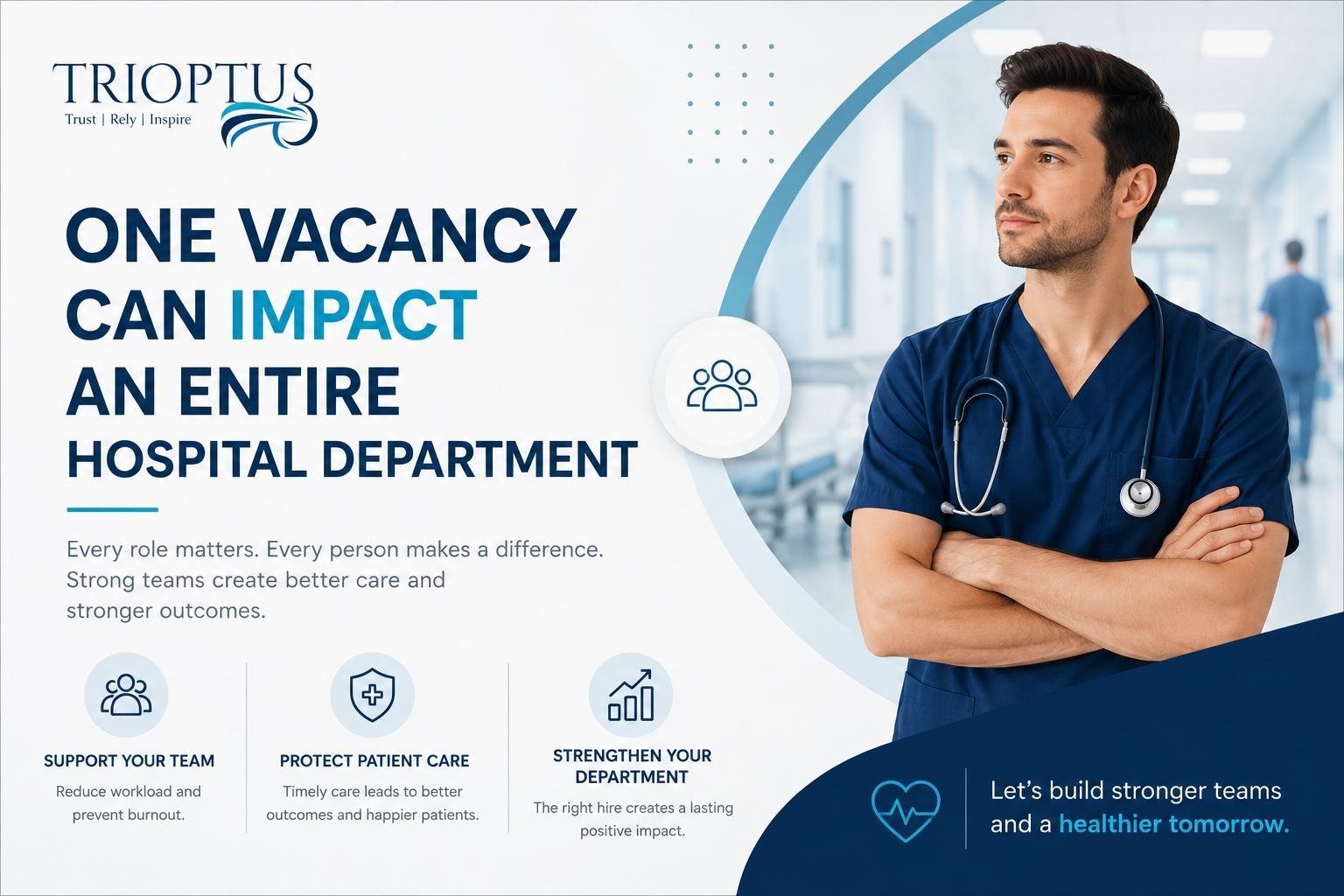
The Ripple Effect of a Single Vacancy
Healthcare departments depend on teamwork. A patient's care may involve nurses, physicians, medical assistants, laboratory professionals, imaging technicians, pharmacists, therapists, and administrative staff. Each person has a specific responsibility, and these responsibilities are connected.
When one position remains unfilled, other employees may need to absorb additional responsibilities. What begins as one vacancy can gradually create additional pressure throughout the department.
For example, if a hospital unit is short one registered nurse, other nurses may need to care for additional patients or work additional shifts. This can increase workload and reduce the amount of time available for each patient. Over time, the additional pressure can affect morale, productivity, and employee satisfaction.
A Single Vacancy Can Lead To:
- Increased workload for existing employees.
- Additional overtime and labor expenses.
- Longer response and service times.
- Greater risk of employee burnout.
- Increased difficulty maintaining schedules.
- Additional pressure on department leadership.
- Increased Workload for Existing Staff
One of the most immediate effects of an unfilled position is the redistribution of work. Healthcare professionals already operate in demanding environments, and additional responsibilities can quickly increase workplace pressure.
When employees consistently take on responsibilities beyond their normal workload, they may have less time for documentation, communication, patient education, and other important tasks. Even highly experienced professionals can become overwhelmed when staffing shortages continue for extended periods.
This is why staffing should not be viewed simply as a matter of filling a schedule. Adequate staffing helps create an environment where healthcare professionals can perform their responsibilities effectively without consistently operating at maximum capacity.
The Connection Between Staffing and Burnout
Burnout is a significant concern across the U.S. healthcare workforce. While many factors contribute to burnout, persistent understaffing can intensify the problem.
When employees regularly work extra shifts, manage heavier patient loads, or cover vacant positions, physical and emotional fatigue can increase. If the situation continues, employees may begin looking for other opportunities or consider leaving the organization altogether.
This creates a difficult cycle: one vacancy increases workload → increased workload contributes to burnout → burnout contributes to turnover → turnover creates additional vacancies.
Breaking this cycle requires healthcare organizations to address staffing challenges proactively rather than waiting until vacancies become critical.
Overtime Can Increase Operating Costs
A vacancy also has a financial impact. When hospitals need to cover staffing gaps, they may rely on overtime, per-diem staff, temporary workers, or contract professionals.
While these options can provide short-term relief, prolonged reliance on them can increase labor costs. The organization may spend significantly more managing a vacancy than it would have spent recruiting and retaining a qualified permanent employee.
Healthcare leaders should therefore consider the total cost of a vacancy, rather than focusing only on the cost of recruitment.
Potential Costs Include:
- Overtime expenses.
- Temporary or contract staffing costs.
- Recruitment and onboarding expenses.
- Productivity losses.
- Administrative workload.
- Potential turnover among existing employees.
- Patient Experience Can Be Affected
- Patients may never know that a department is operating with an open position, but they can experience the effects.
When teams are understaffed, employees may have less time to communicate with patients and families, respond to requests, complete documentation, or coordinate services. This can contribute to longer wait times and a less personalized patient experience.
The goal is not simply to have enough people on a schedule. The goal is to have the right people available to provide safe, timely, and compassionate care.
Department Productivity Can Decline
A healthcare department functions like an interconnected system. If one part slows down, other areas can be affected.
For example, a shortage of laboratory personnel may delay test processing. Delays in diagnostic information can affect clinical decision-making and potentially create downstream delays for other departments.
Similarly, a shortage of administrative or scheduling staff can create bottlenecks that affect appointments, referrals, documentation, and communication.
This demonstrates why every healthcare position has value, even when the role does not directly involve bedside patient care.
Leadership Faces Additional Pressure
Vacancies also place additional responsibilities on department managers and healthcare leaders. Leaders may spend more time managing schedules, finding coverage, handling employee concerns, and responding to operational issues.
Instead of focusing on strategic priorities such as employee development, quality improvement, and patient experience, leaders may be forced to concentrate on immediate staffing problems.
Effective workforce planning allows leaders to spend less time reacting to staffing emergencies and more time improving their departments.
One Vacancy Can Create Another
Perhaps the most concerning effect of prolonged vacancies is the possibility of a turnover cycle.
When existing employees repeatedly cover open positions, they may experience fatigue and frustration. If they eventually leave, the original staffing problem becomes even larger.
For example:
1 vacancy → increased workload → employee stress → burnout → turnover → additional vacancies
Healthcare organizations need strategies that interrupt this cycle before it becomes difficult to reverse.
Why Proactive Recruitment Matters
The longer a critical position remains open, the greater the potential impact on the department. Proactive recruitment helps organizations identify and engage qualified professionals before staffing shortages become emergencies.
Rather than waiting until a department is critically understaffed, healthcare organizations can maintain talent pipelines, build relationships with qualified candidates, and work with specialized healthcare recruitment partners when necessary.
A proactive approach provides organizations with greater flexibility and reduces the pressure associated with last-minute hiring.
Building a More Resilient Healthcare Workforce
Preventing the impact of vacancies requires more than recruiting quickly. Healthcare organizations need a broader workforce strategy that combines recruitment with retention, workforce planning, employee engagement, and professional development.
Organizations should understand which positions are most critical to operations and develop contingency plans for unexpected vacancies. They should also regularly evaluate workload, turnover patterns, employee engagement, and recruitment performance.
Key Strategies
Maintain an active healthcare talent pipeline.
Identify critical positions before vacancies occur.
Monitor employee workload and engagement.
Invest in retention and career development.
Use workforce data to forecast staffing needs.
Build relationships with qualified healthcare professionals.
Create faster and more efficient hiring processes.
Recruitment and Retention Must Work Together
Hiring someone to fill a vacancy solves the immediate problem, but long-term workforce stability requires retention.
Healthcare organizations should ask why employees stay, why they leave, and what improvements could make the workplace more attractive. Competitive compensation is important, but so are leadership, career growth, scheduling flexibility, recognition, workplace culture, and professional support.
When recruitment and retention strategies work together, organizations are better positioned to maintain stable teams and reduce repeated vacancies.
Conclusion
A healthcare vacancy is rarely just one empty position. It can affect workloads, employee well-being, operating costs, productivity, leadership capacity, and the patient experience. The longer a critical position remains unfilled, the greater the potential ripple effect across the entire department.
For U.S. healthcare organizations, proactive workforce planning and effective recruitment are essential to maintaining strong teams. By identifying staffing risks early, building reliable talent pipelines, supporting existing employees, and making recruitment more efficient, healthcare leaders can prevent a single vacancy from becoming a department-wide challenge.
Ultimately, every healthcare professional plays a role in keeping the system moving. Filling one vacancy isn't simply about adding one employee—it can help restore balance, support the existing team, and strengthen the quality of care delivered to every patient.